
Cleared on paper. Not ready for daily life.
This isn't about getting back to a sport. It's about trusting your body again for the everyday stuff: lifting, carrying, playing with your kids, a full day on your feet. AthleX bridges the gap between physical therapy and real strength, so you rebuild confidence and resilience without rushing or re-injuring yourself.
No pressure. We'll tell you honestly if we're the right fit, even if that means pointing you somewhere else.
This program is for you if:
- You want your everyday strength and confidence back, not a return to a specific sport
- You've finished physical therapy but don't feel normal in daily life yet
- Lifting groceries, playing with your kids, or a full day on your feet still feels uncertain
- You feel weak, unstable, or hesitant with everyday movements like lifting, carrying, or stairs
- You're unsure how to progress safely on your own without a structured plan
- You're returning from ACL/knee, back/disc, shoulder, hip, or ankle surgery, or general orthopedic surgery
Training to get back to a specific sport instead? See Return to Sport Training.
This isn't the right fit for everyone, and that's okay.
- You're looking for insurance-based care
- You only want passive treatment
- You want a generic gym program
- You expect instant results
- You're not willing to train consistently
- You're not ready to invest in long-term outcomes
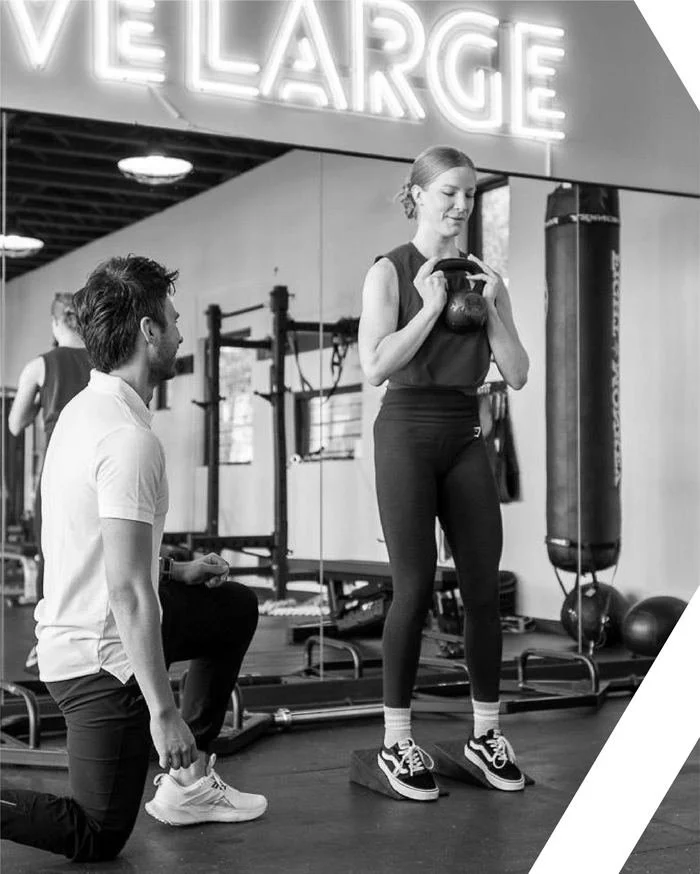
Clearance is about safety. Readiness is about capacity.
Medical clearance means your tissue has healed enough, you can perform basic daily activities, and you're no longer a liability for surgery or acute damage. It does not mean you've rebuilt lost strength, restored power and speed, regained symmetry, or prepared your joints for high loads.
Most people leave physical therapy still carrying real deficits, often 20–40% of their strength, along with poor deceleration control, uneven loading between sides, and lingering fear around certain movements. That's not a reflection on your PT. Rebuilding full strength and confidence back to where you can trust your body again was never really part of the job. That's where AthleX picks up.
We don't guess. We don't rush. We don't follow templates.
Assess
Joint-by-joint assessment, full movement screen, strength testing, force plate analysis, Moxy monitoring, and InBody body composition. This tells us what's still weak, what's compensating, what's underloaded, and what tissues lost capacity during rehab.
Plan
Built around your surgery or injury history, current strength levels, movement limitations, and lifestyle demands: low-load control → moderate strength → higher-load strength → power and elasticity → fatigue tolerance → real-world movement demands.
Train
Progressive strength training, tempo-controlled lifting, velocity-based training, controlled plyometrics when appropriate, and deceleration and change-of-direction drills. This is not more rehab. This is reconditioning your body for real life again.
Track
Strength benchmarks, force plate symmetry changes, power output, tissue oxygen response, lean mass gains, and confidence under load, so we can progress you intelligently and reduce reinjury risk.
Most people fall into one of two traps after rehab
They stop training entirely, or they jump into generic workouts too soon. AthleX exists to solve both.
- We specialize in the transition phase
- We use objective testing, not guesswork
- We progress load intentionally, not emotionally
- We rebuild muscle mass for resilience
- We retrain power and speed safely
- We account for fear-based movement patterns when progressing load
- We don't rush you into heavy lifting
- We treat manual therapy as support, not a crutch
This is not about "being careful forever." It's about becoming strong enough to not have to be careful.
The patterns that derail progress
Mistake #1 — Stopping all structured training
Discharge from PT is not the finish line. It's halftime.
Mistake #2 — Jumping into bootcamps or classes too soon
High-volume group workouts ignore your injury history and readiness.
Mistake #3 — Avoiding heavy loading out of fear
Avoidance teaches your nervous system that movement is dangerous. That sensitivity increases reinjury risk.
Mistake #4 — Training like nothing ever happened
Your body needs a reconditioning phase. Skipping it is how people get hurt again.
If you've been cleared but still don't feel "normal," this system applies.
- ACL reconstruction
- Meniscus surgery
- Rotator cuff repair
- Labral tears
- Disc herniations
- Spinal surgery
- Hip replacements
- Ankle sprains
- Tendon repairs
- General orthopedic surgeries
Our clients don't just finish rehab
- Rebuild lost strength and restore muscle mass
- Improve movement symmetry
- Increase confidence under load
- Return to sports and hobbies
- Reduce reinjury risk
- Travel without pain flare-ups, and train without fear again
This is not about checking a box. It's about building a body that can handle life again.
Results shown are individual and not guaranteed. Outcomes vary by starting point, condition, and consistency.
Real clients, real post-rehab outcomes
"They didn't dismiss my issues or try to push me into a one-size-fits-all program. Instead, they work with my physical therapist to create a routine specifically designed for me. After three months, my physical therapist is incredibly impressed with the progress I've made."
More Reviews From Google
Results shown are individual and not guaranteed. Outcomes vary by starting point, condition, and consistency.
It starts with a 90-minute evaluation
Your evaluation includes:
- Joint-by-joint assessment and movement analysis
- Strength testing
- Force plate testing
- Moxy tissue oxygen monitoring
- InBody body composition
- A personalized post-rehab roadmap
This session tells us exactly what's still weak, what needs to be rebuilt, what movements are still limited, how fast you should realistically progress, and what reinjury risks still exist.
Before you book
I was cleared from physical therapy, so why don't I feel normal yet?
Medical clearance means your tissue has healed enough and you're no longer a liability for further damage. It does not mean you've rebuilt lost strength, restored power and symmetry, or regained confidence under load. Clearance is about safety. Readiness is about capacity, which is a separate phase most physical therapy programs are not designed to finish.
What happens after physical therapy discharge at AthleX?
AthleX runs every post-rehab client through a structured system: an evaluation using force plate, Moxy, InBody, and movement assessment testing, followed by an individualized progression from low-load control to moderate strength, higher-load strength, power, and real-world movement demands.
Post-Rehab Training in Austin, TX Starts Here
Book your free discovery call and build a plan that actually prepares you for real training and life again. Looking for Chronic Pain, Return to Sport, or Strength & Performance?
No pressure. We'll tell you honestly if we're the right fit, even if that means pointing you somewhere else.